



IL-7
Interleukin-7 (IL-7) is a critical cytokine that regulates the development, homeostasis, and activation of T lymphocytes[1]. IL-7 signaling occurs through the IL-7 receptor (IL-7R), a heterodimer composed of IL-7Rα and the common γ chain, activating the JAK/STAT pathway[2][1]. Mechanistically, IL-7 supports T-cell survival by promoting proliferation and inhibiting apoptosis via STAT5-dependent transcriptional programs[1]. In disease models, IL-7 has been shown to expand CD28- cytotoxic T lymphocytes in IgG4-related disease, modulating immune balance and effector functions[3]. Compared with related cytokines, IL-7 uniquely targets both conventional T cells and natural killer cells, while isoform-specific functions of IL-7Rα mutations influence immunodeficiency or leukemogenesis[2]. In autoimmune conditions such as rheumatoid arthritis, IL-7/IL-7R signaling exerts a dual effect on osteoclastogenesis, directly inhibiting differentiation via STAT5 and indirectly promoting RANKL expression on T cells, indicating a complex osteoimmunological role[4]. Agonists or antagonists of IL-7 signaling, including IL-7Rα-blocking antibodies, have been used experimentally to modulate immune responses and protect against tissue damage in inflammatory models[4][1]. These applications highlight IL-7 as both a regulator of lymphocyte homeostasis and a potential therapeutic target in immune-mediated diseases[1].
References:
- [1]. Campos LW, et al. Deleterious and Oncogenic Mutations in the IL7RA. Cancers (Basel). 2019 Dec 5;11(12):1952. [Content Brief]
- [2]. Xia CS, et al. IL-7 Promotes the Expansion of Circulating CD28- Cytotoxic T Lymphocytes in Patients With IgG4-Related Disease via the JAK Signaling. Front Immunol. 2022 Jul 7;13:922307. [Content Brief]
- [3]. Xu H, et al. Dual effect of IL-7/IL-7R signalling on the osteoimmunological system: a potential therapeutic target for rheumatoid arthritis. Immunology. 2021 Sep;164(1):161-172. [Content Brief]
- [4]. Al-lateef BA, et al. The pathophysiology and role of IL-7 in the immune response and autoimmune diseases: a review article. Int J Health Med Res. 2025;4(2):72-76.
-
IL-7 Related Products (15)
Related Products (15)

- 1
-
Ritlecitinib
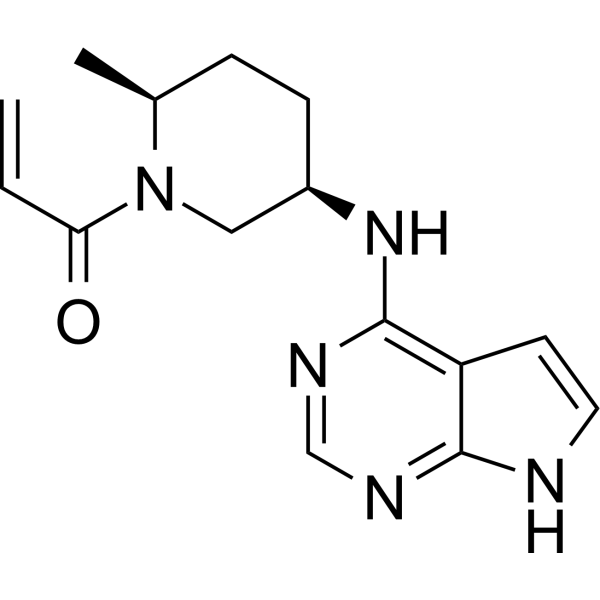 0 ImagesSynonyms: PF-06651600Ritlecitinib (PF-06651600) is a highly selective, orally active, irreversible covalent JAK3 inhibitor (IC50=33 nM) without inhibitory activity towards JAK1, JAK2, and TYK2 (IC50 >10 μ M). Ritlecitinib rapidly inactivates the JAK3 kinase, and blocks signaling and downstream STAT phosphorylation mediated by common gamma chain cytokines such as IL-2 and IL-15. Ritlecitinib can inhibit Th1/Th17 cell differentiation and function, and effectively suppress preclinical animal models such as alopecia areata, adjuvant-induced arthritis (AIA), and experimental autoimmune encephalomyelitis (EAE).
-
Lusvertikimab
 0 ImagesSynonyms: OSE-127Lusvertikimab (OSE-127) is a humanized IL7R monoclonal antibody. Lusvertikimab is not internalized by target cells and prevents IL7R heterodimerization and subsequent downstream signaling. Lusvertikimab has anti-leukemic efficacy and has the potential for B cell precursor acute lymphoblastic leukemia (BCP-ALL) research.
-
Verekitug
 0 ImagesCat. No.: HY-P990774CAS No.: 2768386-15-6Synonyms: ASP-7266; TRAB-1; UPB-101Verekitug (ASP-7266; TRAB-1; UPB-101) is a human monoclonal antibody targeting the thymic stromal lymphopoietin receptor (TSLPR), with a mean half-life of approximately 20 days. At doses of Verekitug ≥100 mg, complete and sustained TSLPR-specific occupancy is achieved, and the antibody does not bind to IL-7Rα. By inhibiting TSLP-driven inflammatory responses, Verekitug blocks TSLP-induced cell proliferation and TARC expression, while reducing fractional exhaled NO levels, blood eosinophil counts, and levels of IL-5 and IgE. Verekitug significantly improves scores for nasal polyps, nasal congestion and olfactory dysfunction, with favorable safety and good tolerability; potential adverse reactions include headache, upper respiratory tract infection, sinusitis and nasopharyngitis. Verekitug is used in relevant studies on asthma, chronic rhinosinusitis with nasal polyps and chronic obstructive pulmonary disease.
-
Bempikibart
 0 ImagesSynonyms: ADX-914Bempikibart (ADX-914) is a fully human IgG1-κ monoclonal antibody targeting IL-7Rα. Bempikibart binds to the IL-7 receptor alpha and blocks IL-7 and TSLP signaling. Bempikibart reduces T cell populations while relatively preserving regulatory T cells. Bempikibart inhibits Th1, Th2, and Th17 immune pathways. Bempikibart can be used in research on alopecia areata and atopic dermatitis.
-
Efineptakin alfa
 0 ImagesSynonyms: NT-17Efineptakin alfa (NT-17) is a long-acting recombinant human IL-7. Efineptakin alfa supports the proliferation and survival CD4+ and CD8+ cells in both human and mice. Efineptakin alfa can be used for glioblastoma research.
-
QX008N
 0 ImagesCat. No.: HY-P992447QX008N is a humanized IgG1 monoclonal antibody and also a TSLP inhibitor with a KD value of 0.0175 nM. QX008N blocks TSLP-induced signaling pathways by inhibiting the interaction of TSLP-TSLPR-IL-7Rα. QX008N reduces eosinophil and IgE levels, improves pulmonary function, blocks TSLP-induced inflammation, and enhances the inhibitory effect on inflammatory mediators when administered in combination with anti-IL-4R antibodies. QX008N is applicable to relevant research on asthma.
-
Anti-Mouse/Human IL-7 Antibody (M25)
 0 ImagesCat. No.: HY-P990210Purity: 98.43%Anti-Mouse/Human IL-7 Antibody (M25) is an anti-mouse IL-7 IgG2b monoclonal antibody. Anti-Mouse/Human IL-7 Antibody (M25) alleviates inflammation by blocking IL-7 signaling and inhibiting innate lymphoid cells (ILC2s) activation. Anti-Mouse/Human IL-7 Antibody (M25) can reduce the number of B cell precursors. Anti-Mouse/Human IL-7 Antibody (M25) can be used for researches on inflammation conditions such as airway inflammation.

-
GSK2618960
 0 ImagesCat. No.: HY-P991424GSK2618960 is a human monoclonal antibody (mAb) targeting IL-7Ra/CD127. GSK2618960 inhibits IL-7-induced STAT5 phosphorylation. GSK2618960 enhances CD4 T cell proliferation response and increases CD83, CD86, and CD209 expression in PBMCs. GSK2618960 can be used for the research of autoimmune and allergic inflammatory diseases. Recommended isotype control: Human IgG1 kappa, Isotype Control (HY-P99001).
-
Ritlecitinib tosylate
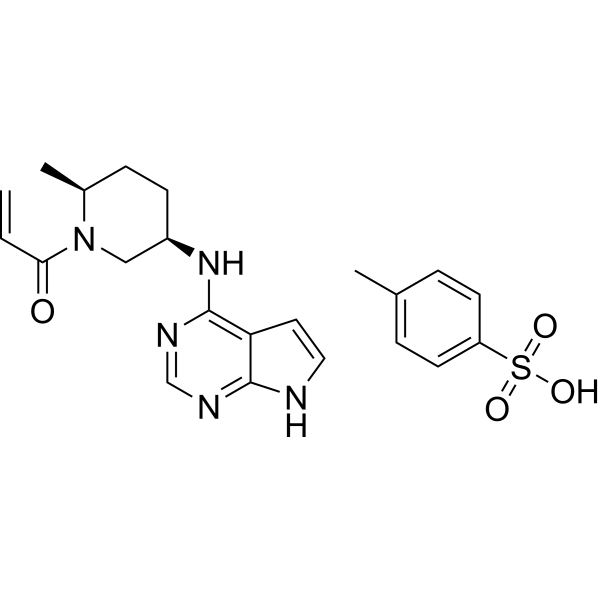 0 ImagesSynonyms: PF-06651600 tosylateRitlecitinib (PF-06651600) tosylate is a highly selective, orally active, irreversible covalent JAK3 inhibitor (IC50=33 nM) without inhibitory activity towards JAK1, JAK2, and TYK2 (IC50 >10 μ M). Ritlecitinib tosylate rapidly inactivates the JAK3 kinase, and blocks signaling and downstream STAT phosphorylation mediated by common gamma chain cytokines such as IL-2 and IL-15. Ritlecitinib tosylate can inhibit Th1/Th17 cell differentiation and function, and effectively suppress preclinical animal models such as alopecia areata, adjuvant-induced arthritis (AIA), and experimental autoimmune encephalomyelitis (EAE).
-
Patiromer
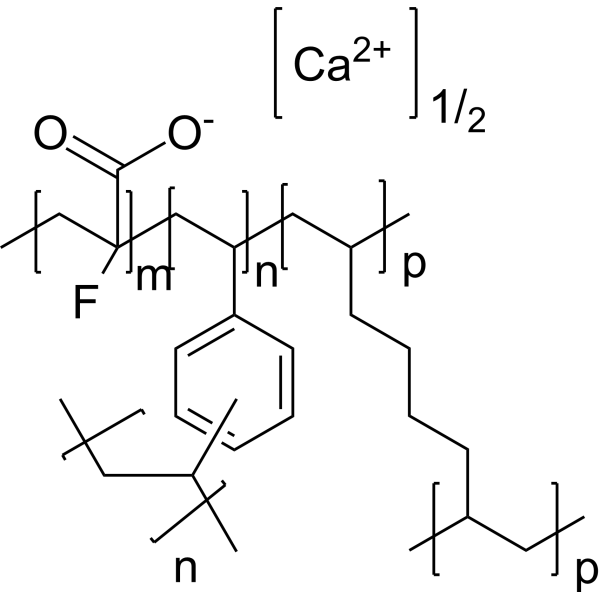 0 ImagesCat. No.: HY-112961CAS No.: 1208912-84-8Patiromer is an orally active, selective and non-absorbable intestinal potassium (K+) polymer binder that reversibly binds potassium ions in exchange for calcium (Ca2+). Patiromer can rapidly and continuously reduce serum potassium levels, maintain a normal blood potassium state, and reduce serum aldosterone levels. Patiromer also increases fecal potassium excretion. Patiromer is mainly used in the study of hyperkalemia associated with diseases such as chronic kidney disease, diabetes, and heart failure, and is particularly suitable for improving renin-angiotensin-aldosterone system inhibitor (RAASi) therapy.
-
Tepilukimig
 0 ImagesCat. No.: HY-P991720CAS No.: 2985643-31-8Tepilukimig is a bivalent humanized IgG1κ monoclonal antibody inhibitor targeting TSLP-IL7Rα and TSLP-CRLF2. Tepilukimig inhibits the binding of TSLP to its receptors (IL7Rα and CRLF2) on the cell surface, thereby completely interrupting the inflammatory signaling pathway driven by TSLP. Tepilukimig can be used for allergic and inflammatory diseases like atopic dermatitis and asthma research.
-
Ritlecitinib malonate
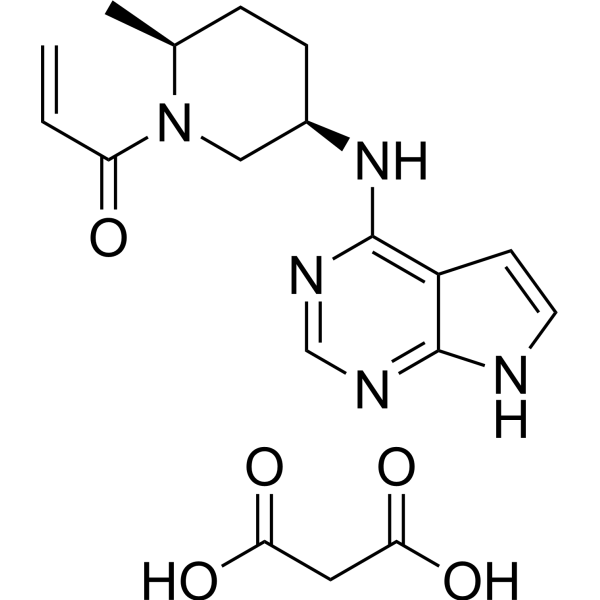 0 ImagesCat. No.: HY-100754ACAS No.: 2140301-97-7Synonyms: PF-06651600 malonateRitlecitinib (PF-06651600) malonate is a highly selective, orally active, irreversible covalent JAK3 inhibitor (IC50=33 nM) without inhibitory activity towards JAK1, JAK2, and TYK2 (IC50 >10 μ M). Ritlecitinib malonate rapidly inactivates the JAK3 kinase, and blocks signaling and downstream STAT phosphorylation mediated by common gamma chain cytokines such as IL-2 and IL-15. Ritlecitinib malonate can inhibit Th1/Th17 cell differentiation and function, and effectively suppress preclinical animal models such as alopecia areata, adjuvant-induced arthritis (AIA), and experimental autoimmune encephalomyelitis (EAE).
-
OSE-703
 0 ImagesCat. No.: HY-P991265OSE-703 is a humanized monoclonal antibody inhibitor targeting interleukin-7 receptor α subunit (IL-7Rα). OSE-703 is promising for research of tumors and respiratory diseases.
-
PNA5
 0 ImagesCat. No.: HY-167153CAS No.: 2186644-51-7PNA5 is a novel, blood-brain barrier permeable glycosylated angiotensin-(1-7) peptide and MasR agonist. PNA5 inhibits IL-7, increases IL-10. PNA5 inhibits ROS generation, decreases Iba-1 expression. PNA5 exhibits sustained cognitive protective effects. PNA5 rescues blunted cerebral functional hyperemia. PNA5 can be used in the research of inflammation-related brain diseases.
- 1



